

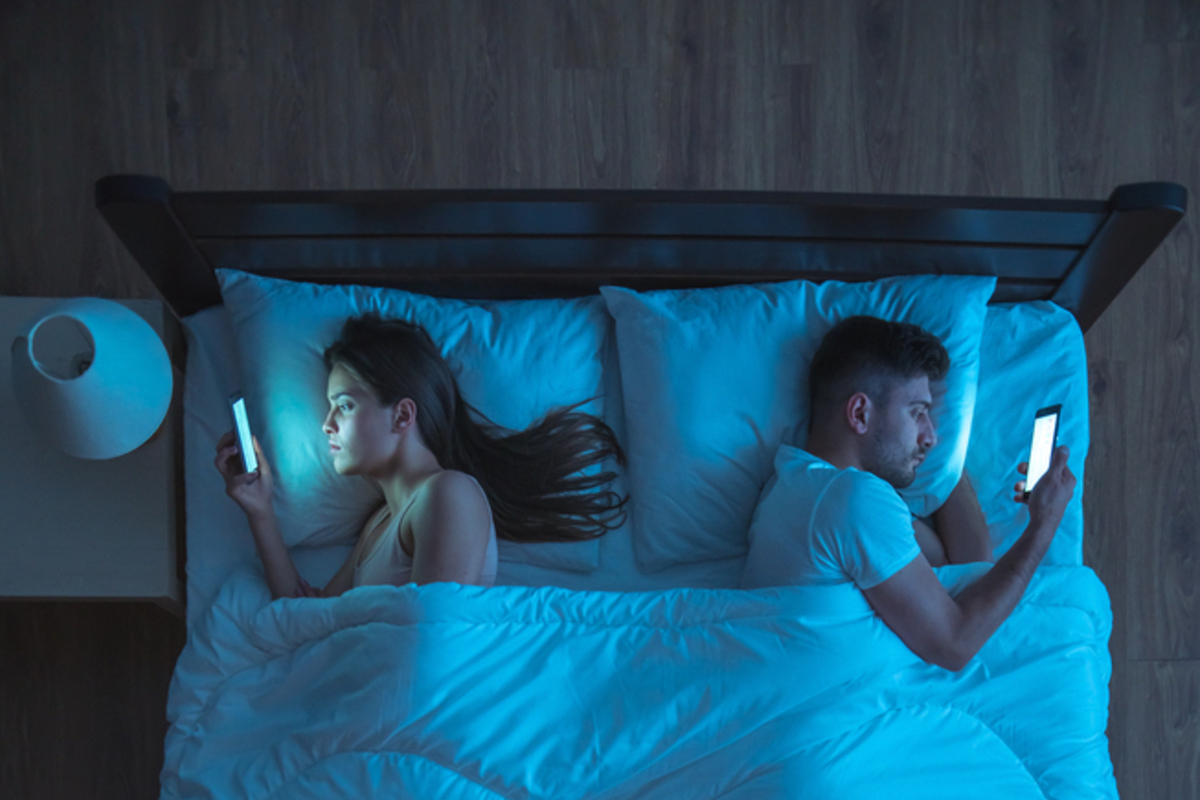
The house is quiet, the lights are out, and you are finally in bed. This is the moment your body has been waiting for all day. Yet, instead of closing your eyes, you reach for the glowing rectangle on your nightstand. You tell yourself you are just going to check your messages or glance at the headlines for five minutes. Two hours later, your eyes are burning, your jaw is clenched, and your mind is racing through a catalog of global crises, economic downturns, and polarizing debates. You are exhausted, but sleep has never felt further away.
This phenomenon, widely known as doomscrolling, has become a defining bedtime ritual for millions of adults. It is a relentless consumption of negative online content that directly sabotages our ability to rest. Breaking this habit requires more than a simple command to put the phone down. It requires a fundamental understanding of why our brains are so easily hijacked by bad news and the implementation of practical, friction-based strategies to protect our evening routines.
The Anatomy of Doomscrolling: Why We Cannot Look Away
To stop doomscrolling, you first have to forgive yourself for doing it. Lying awake reading catastrophic news is not a sign of weak willpower; it is an evolutionary survival mechanism that has been weaponized by modern technology.
Human beings are wired with a psychological mechanism known as the negativity bias. For our ancient ancestors, paying close attention to negative information was a matter of life and death. Remembering where a predator lived or tracking the signs of an impending storm kept them alive, while ignoring danger in favor of positive stimuli was often fatal. Today, our brains still operate on this primitive software. When we encounter a terrifying headline or an outrage-inducing post, our minds interpret it as a survival threat. We keep scrolling because our primitive brain believes that if we just gather enough information, we can control the danger and keep ourselves safe.
Social media platforms and news aggregators are explicitly designed to exploit this vulnerability. They utilize intermittent reinforcement, delivering a steady stream of highly engaging, emotionally charged content mixed with mundane updates. Because you never know what the next swipe will reveal—a harmless meme or a distressing news alert—your brain stays locked in a state of hyper-vigilance, constantly seeking the next piece of the puzzle. The result is a bottomless feed that offers no natural stopping cue, trapping you in a cycle of escalating anxiety.
The Biological Toll of Late-Night Screen Time
The consequences of doomscrolling extend far beyond wasting a few hours of sleep. Engaging with highly stimulating, negative content while lying in bed creates a perfect storm of biological disruption.
The Melatonin Suppression Factor
Your circadian rhythm, the internal clock that dictates your sleep-wake cycle, relies heavily on light cues. As the sun sets, your brain signals the pineal gland to begin producing melatonin, the hormone responsible for initiating sleep. However, the bright blue light emitted by smartphones closely mimics daylight. When you stare at your screen in a dark room, you are essentially telling your brain that the sun is still up. This drastically suppresses melatonin production, making it physically difficult to fall asleep even when your body is tired.
The Cortisol Spike
Beyond the artificial light, the content of your scrolling has a direct hormonal impact. Reading about disasters, arguments, or societal collapse triggers your sympathetic nervous system, shifting your body into a fight-or-flight response. Your adrenal glands release cortisol and adrenaline, hormones designed to help you run from danger. Your heart rate elevates, your breathing becomes shallow, and your muscles tense. You are putting your body on high alert at the exact moment you are asking it to shut down and recover. It is the biological equivalent of drinking a double espresso right before turning off the lights.
Actionable Strategies to Break the Doomscrolling Cycle
Willpower is a finite resource, and it is at its absolute lowest at the end of a long, exhausting day. Relying on self-discipline alone to stop doomscrolling is a losing battle. The most effective way to break the habit is to change your environment and introduce strategic friction.
Implement Physical Friction
If your phone is resting on your nightstand, it is simply too easy to grab when you experience a moment of boredom or insomnia. You must create physical distance between yourself and the device. Establish a rule that your phone charges overnight in a completely different room, such as the kitchen or a home office. If you rely on your phone for a morning alarm, invest in a basic, stand-alone digital alarm clock. By forcing yourself to physically get out of bed and walk down the hallway to check your feed, you introduce a barrier that disrupts the automatic, mindless habit of reaching for the screen.
Establish a Digital Sunset
Just as the sun sets gradually, your technology use should taper off before bed. Implement a strict digital sunset at least one hour before you intend to sleep. This is a hard cutoff time where all screens—phones, tablets, and televisions—are turned off for the night. This window gives your nervous system the necessary time to metabolize the day’s stress and allows your natural melatonin production to begin without interference.
Neutralize the Device with Grayscale Mode
If entirely removing the phone from the bedroom feels impossible right now, you can strip the device of its psychological appeal. Most smartphones have an accessibility setting that allows you to change the display to grayscale, turning your vibrant, engaging screen into a dull black-and-white interface. Tech designers use bright reds, vivid blues, and sharp contrasts to trigger dopamine release and keep your eyes glued to the screen. Switching to grayscale removes this visual stimulation. Without the vibrant colors, social media feeds become remarkably boring, making it much easier to put the phone down after a few minutes.
Replace the Routine, Do Not Just Remove It
Habits are incredibly difficult to break if you leave a void in their place. If you simply lie in the dark staring at the ceiling, your anxious brain will demand a distraction, and the urge to doomscroll will become overwhelming. You must replace the destructive routine with a constructive one.
When you begin your digital sunset, pivot to an activity that occupies your mind but lowers your heart rate. Reading physical fiction is highly effective; following a narrative requires cognitive engagement, which prevents your mind from wandering to real-world anxieties, but it does not trigger a stress response. Alternatively, listen to a slow-paced audiobook, practice gentle stretching, or work on a tactile puzzle. The goal is to provide your brain with a safe, low-stakes focal point while your body winds down.
Set Information Boundaries
Part of the doomscrolling compulsion stems from a noble desire to stay informed and be a responsible citizen. It is entirely possible to care deeply about the state of the world without sacrificing your mental health to the midnight scroll. You must establish strict boundaries around when and how you consume the news. Designate specific, time-boxed periods during the day for catching up on current events—perhaps over your morning coffee or during a lunch break. Accept the fundamental truth that reading one more tragic article at midnight will not solve the world’s problems, but it will absolutely ruin your capacity to handle the next day effectively.
Reclaiming the Night
Breaking the habit of doomscrolling is an act of reclaiming your own boundaries. Modern technology is engineered to capture your attention at all costs, turning your private moments of rest into another metric for engagement. By understanding the psychological traps of the digital feed and designing an environment that actively discourages late-night scrolling, you can take back control of your evenings. Sleep is not a luxury you can afford to trade for a false sense of digital vigilance. It is a foundational pillar of your physical and mental resilience. Protect your rest fiercely, leave the problems of the world for the morning light, and give your mind the peace it has earned.